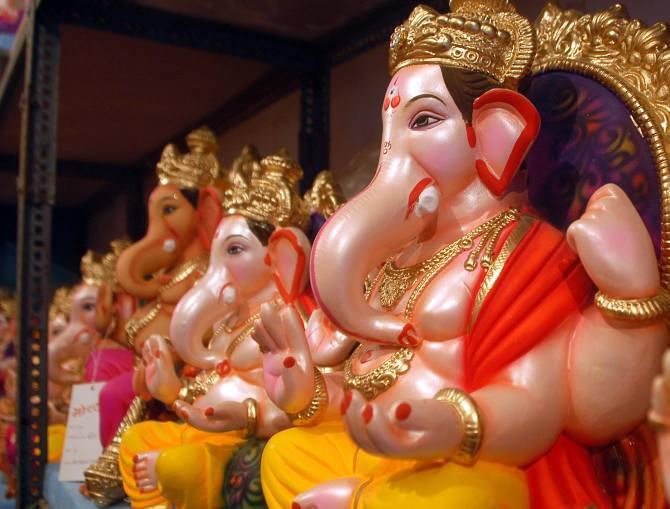
Jaipur Moorti Mahal September 2014 - Ganesh Marble Moorti | Marble Handicrafts - Jaipur Moorti Mahal

Jaipur Moorti Mahal

- Perfect Place To Find The God...

Jaipur Moorti Mahal

Perfect Place To Find The God...

Jaipur Moorti Mahal

Perfect Place To Find The God...

Jaipur Moorti Mahal

Perfect Place To Find The God...

Jaipur Moorti Mahal

Perfect Place To Find The God...

How to Perform or Observe Navratri Vrat?

Navratri Vrat or Navaratri Vratam is an important fast observed by Hindus during Ashvin (September – October). Navratri 2014 begins on September 25 and ends on October 3. Vasant Navratri is from March 31 to April 8. It is believed that those devotees who perform Navratri fasting will find happiness on earth and will receive ‘moksha.’ Legend has it that, how to observe the Navarathri Vrat was once narrated by Goddess Durga to one of her ardent devotee. The Vratam is observed by both men and women and Navratri mantra is repeated during the period.

Navratri Fast
The Navratri fast is observed from the first day to the ninth day of Ashvin month. People take bath in the morning and evening during this period and some even drink water only after the ritual bath in the morning.
Most devotees take only a single meal during the day. Non-vegetarian food is totally avoided. Some people confine to milk and fruits during the nine days.

Some devotees only observe fast during three days i.e., first fast during any one of the first three days and second fast during any one of the next three and last in any one of final three days.


How to perform the rituals?
A Kalash is prepared at home and the water is changed daily for nine days. The kalash is placed on grains on raised platform or in the Puja room. Goddess Durga is worshipped during the first three days, Goddess Lakshmi for the next three days, and Goddess Saraswathi during the last three days. (Some people make clay figures of the Goddesses during the period).

Each day fresh flowers and fruits are offered to the Goddess. Arati is performed and bhajans are recited.

The Mantras and Bhajans to be recited
Devi Mahatmya (Durga Saptashati) and Sri Lalita Sahasranama are recited during the period. The important Navratri mantra is ‘Aaim hreem kleem chamundayai vichche.’

Some devotees conduct special homas and pujas during the period.

On the ninth day, all books, pen and whatever implements that a person uses for his/her livelihood is worshipped and is not touched on the day.

On the tenth day, that is the Vijayadashami day in South India, especially in Kerala, young children are initiated into the world of learning.

There are no hard and fast rules for any fasting in Hindu religion. There is always scope for flexibility. Some people just abstain from non-vegetarian food during the period. Some people just visit temples all the nine days. Some people read Bhagavad Gita or other holy books during the period.


Reference:-  http://goo.gl/8PMqkk
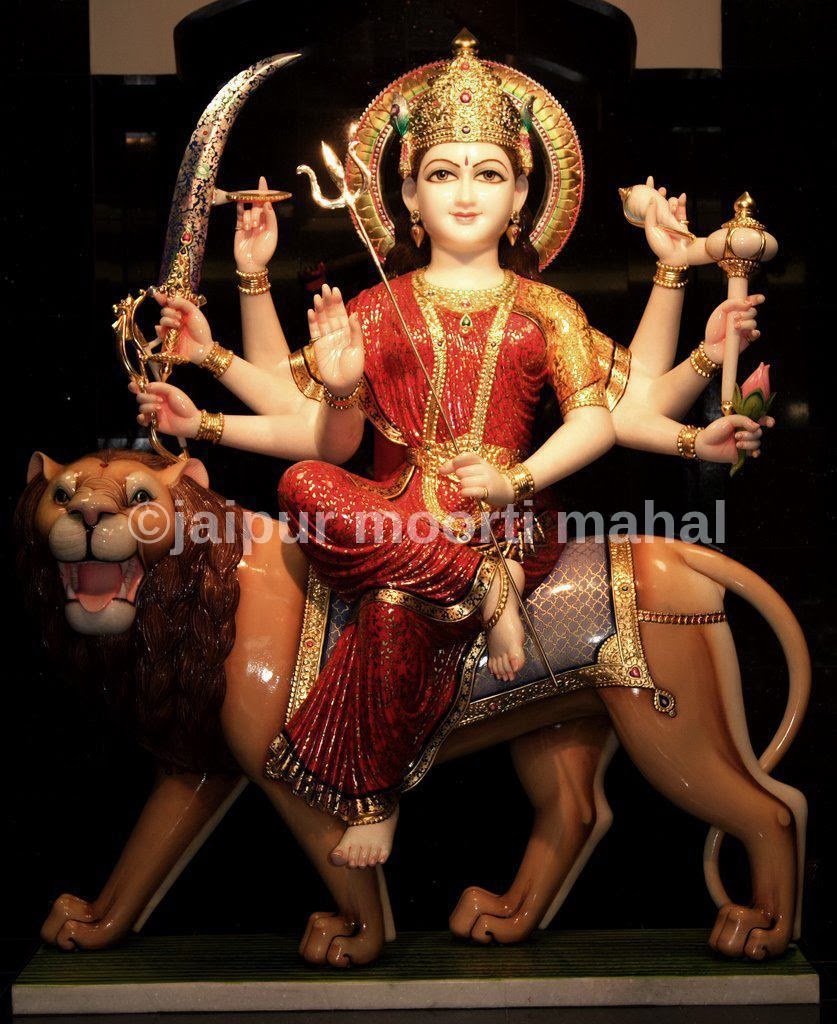
Story of Navratri and Durga Puja in Hindu Religion – Durga slaying Mahishasura

Navratri and Durga Puja

Navratri and Durga Puja


The story associated with Navratri and Durga Puja is found in the Markandeya Purana. The chapters 81 to 93 in the Markandeya Purana talks about the slaying of demon Mahishasura or Mahisha by Durga and it is referred as Devimahatmya and is recited during the Navaratri and Durga Puja. It symbolized the victory of good over evil. In 2014, Navratri begins on September 25 and ends on October 3.

Devi-Mahatyma extols the greatness of Durga in 700 hymns grouped into 537 sections and therefore it is also known as Durga Sapta Sati. It details the exploits of the goddess in her three major forms: Kali, Lakshmi and Saraswati, representing the three fold energy: strength, wealth and wisdom. The most famous episode is Durga killing Mahishasura.

Birth of Mahishasura
Legend has it that two sons of Danu called Rambha and Karambha performed penances to gain more powers. Rambha performed the austerities by standing amidst five ritual fires called Panchagni and Karambha by standing in neck-deep in water.

Indra, the lord of the gods, felt threatened by such intense austerities and took the form of a crocodile and killed Karambha. Rambha, who came to know about his brother’s death, increased the intensity of his austerities and won several boons from gods like great brilliance, beauty, invincibility in war. Most importantly, the boon that he will not be killed by humans or Gods or Asuras (demons).

After receiving the boon, he was roaming in the garden of Yaksha and there he fell in love with a female-buffalo. To express his love Rambha took the form of a male-buffalo and copulated with the she-buffalo. But soon a real male buffalo discovered Rambha in the garden and killed him.

Rambha’s inflated ego made him not to ask the boon of invincibility from animals. And an animal happened to be the reason for his death.

The female-buffalo, who was pregnant, decided to kill herself in the funeral pyre of Rambha. She jumped into the pyre and from the pyre sprang up a mighty asura (demon) with the head of a buffalo and human body. This was Mahishasura.

Mahishasura Defeats Gods
Mahishasura defeated the gods and the demons. He attacked the heaven and captured it and made ‘devas’ his slaves. He proclaimed that he is now Indra – the lord of the gods. The gods led by Brahma approached Vishnu and Shiva and appraised them of the situation.

Birth of Goddess Durga
The actions of Mahishasura caused intense anger in the Trimurtis. The anger emerging out of Brahma, Vishnu and Shiva combined to the take the shape of a terrible form and this was Durga.

It is said that the flames of fire that gushed out of the eyes of the Trimurtis – Brahma, Vishnu and Shiva – formed a mountain, brilliant like a million suns. Out of this mountain, Durga took shape as the goddess more powerful than all the gods.

‘samasta devanam tejo rasi samudbhavam’ Durga is the brilliance of all the gods.

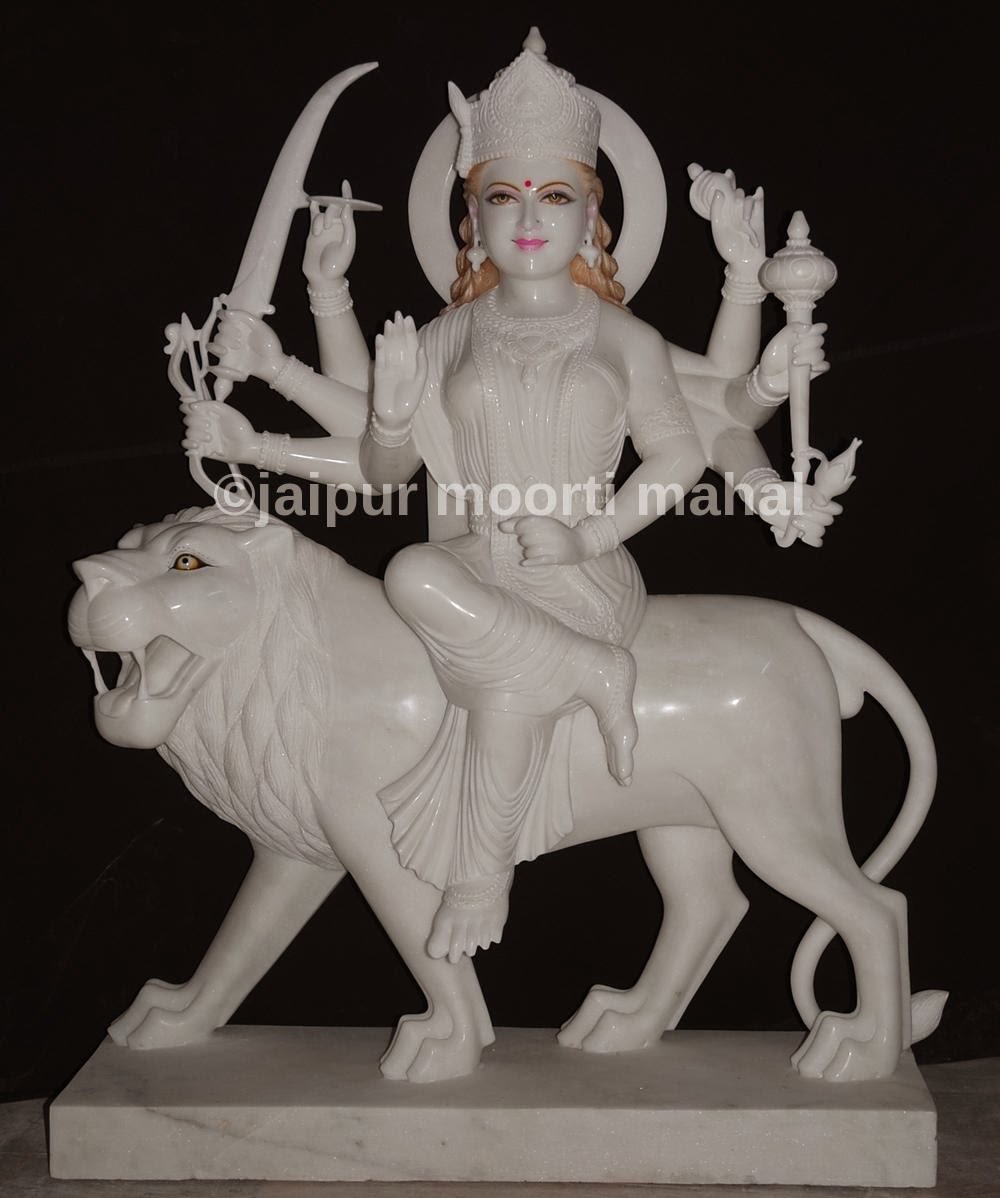
Captivated by the awe-inspiring Durga, the gods bestowed on her their own characteristic weapons. Shiva – the trident, Vishnu – the discus, Varuna – the conch, Agni – the spear, Yama – the cudgel, Vayu – the bow, Surya – the arrows, Indra – the vajra, Kubera – the mace, Brahma – the water pot, Kala – the sword and Vishwakarma – the axe. Himavan gifted a mountain lion as her vehicle.

Goddess Durga kills Mahishasura
When the goddess was seen by Mahishasura, he fell in love with her and sought to marry her. The goddess promised to marry him, if he defeated her in the battle. A terrible combat ensued and continued for nine days. Finally, Durga assumed the terrifying form of Chandika and pinned Mahishasura down with her foot and pierced his neck with her spear and she cut his head off with her sword.

The legend about the killing of Mahisha is found in many Puranas and therefore there are slight variations in the story. The story is also found in Vamana Purana, Varaha Purana, Shiva Purana, Skanda Purana, Devi Bhagavatam and Kalika Purana.

Reference:- http://goo.gl/f5LEiD

Mahasaptami – Durga Puja Saptami


Mahasaptami – Durga Puja Saptami

Mahasaptami – Durga Puja Saptami

Mahasaptami – Durga Puja Saptami


Mahasaptami, or Durga Puja Saptami, is observed on the seventh day of the waxing phase of moon (Shukla Paksha) in Aashin, or Aswhina month. Durga Puja Saptami 2014 date is October 1. Pran Prathishta, Kolabou, Bodhan are the most important rituals performed on the day.

During dawn, just as the first light of sun descents on earth, Kolabau or Kola Bou rituals are performed. The Pran Prathishta, or life, is breathed into the idol of Goddess Durga. The ritual is performed on the Ghats of a river or pond. The idol of Goddess Durga is not taken to the pond instead life is symbolically transferred from water to plantain tree.

The Kolabau ritual is an elaborate one and the stem of the banana tree is draped in a new red and white saree and the leaves are left uncovered.

The ‘kolabau’ is brought back in a procession and it is placed near Lord Ganesha in the Durga Puja Pandal.


Reference:- http://goo.gl/4HJKJr

Durgashtami – Importance of Durga Ashtami

Durgashtami – Importance of Durga Ashtami


Durgashtami, or Durga Ashtami, is the eight day of the Navaratri and Durga Puja celebrations. Durgastami is also known as Mahashtami and is one of the important days of Durga Puja and a fasting is undertaken by many people. In 2014, the date of Durga Ashtami is October 2. Weapons of Goddess Durga are worshipped on the day and it is known Astra Puja. The day is also known as Virashtami as there are displays using arms or martial arts. It is one of the most important day for Goddess Worship in Hindu religion.

Please note - Chaitra Durgashtami will be observed on March 27, 2015

There is also a belief in some regions that Goddess Kali appeared from the forehead of Durga on this day to annihilate Chanda and Munda and Rakthabija. During the Durga Puja rituals on Mahashtami day the 64 Yoginis and Ashtanayikas – the eight consorts – of Durga are also worshipped.

The eight consorts of Durga, also known as Eight Shaktis, are interpreted differently in different regions of India. But ultimately all the eight goddesses are incarnations of Shakti with different aims. Sometimes they are also an attempt to give form to a particular aspect of Shakti.

The Ashtanayikas that are worshipped during Durga Puja are Brahmani, Maheswari, Kameswari, Vaishnavi, Varahi, Narasinghi, Indrani and Chamunda.

Numerous minor deities including many attendants and guards of Durga are worshipped on the day.
A fast is observed by staunch Durga devotees on Durga Ashtami. Both men and women observe the fast. Shakti temples conduct special pujas on the day and are visited by millions of devotees.

Durgashtami day ends with Sandhi puja, which overlaps into the next day which is the Mahanavami day.

Reference:- http://goo.gl/w72RJM

Darpan during Durga Puja – Mirror offered to Goddess Durga during Pooja

Darpan during Durga Puja
Puranas and Hindu Holy Scriptures are filled with instructions regarding various aspects of Durga Puja. On the third day of the puja – the third day from Mahalaya – a mirror, vermilion and thin cotton dipped in dye are offered. Usually only a silver coated looking glass is offered as a mirror. But in some instances Darpan – a speculum mirror is also offered.

The darpan mirror is used while bathing the murti of Goddess Durga – whenever there is a ritual bathing of Goddess Durga, it is the reflection on the darpan mirror that is bathed not the original murti.

The darpan is also immersed in a pot of water on the morning of Dasami day when the murtis bid farewell.

It must be noted that many Puranas talk about pujas and rituals that are performed from the Mahalaya day to Dasami day but most of them are not followed today. Today the puja only starts from the sixth day after Mahalaya and the important days are seventh, eighth and ninth.

Reference :- http://goo.gl/ODbi6W

Kumari Puja 2014 date – Kanya Pooja during Navratri and Durga Puja

Kumari Puja is the worship of young girls (girl child) during Navratri and Durga Puja. Kumari Puja 2014 date is October 8. Also known as Kanya Pooja or Kanjak Ashtami Puja, it is observed on Durga Ashtami day in some regions and on Mahanavami in some regions. Young girls who are considered to be the living incarnations of Goddess Durga are worshipped on the day.

Chaitra Navratri Kanya Puja 2015 is on March 27 and March 28

Kumari Puja means ‘Virgin Worship.’ The details of age and rituals of Kumari Puja are mentioned in the Nila Tantra.

On Kumari Pooja day, young girls aged between one and twelve are invited to homes and their feet are washed. Red colored thread is tied on their wrists. A tika is applied on the girl child’s forehead and are worshipped as incarnation of Mother Goddess Shakti.

Family members take blessings of the young child by touching their feet.

The children are given ‘Prasad,’ sweets, gifts and sometimes even a token amount of money.
Kumari Puja is more popular in Chandigarh, Haryana, Punjab, Uttarakhand and Himachal Pradesh. In West Bengal, this is an important ritual during Durga Puja.

kumari puja

The Flip Side
But sadly some of the regions that are famous for Kumari Puja and Kanya Pooja are also famous for female feticide and sex-determination tests and the subsequent abortion of female fetuses.

In fact, on the day of Kumari Puja homes in some of the cities in these regions find it hard to get a young girl for puja. The male to female ratio is well below national average. In one the most popular cities in the region the ratio is 773 women for per 1,000 men.

No Bhagavad Gita or No incarnation can change the mindset of such people, who one day worship the girl child and on another day abort a female fetus without any consideration.


Reference:- http://goo.gl/oA1Xqp

Mahanisha Puja

Mahanisha Puja


Mahanisha Puja is an important ritual dedicated to Goddess Shakti and is performed during the Navratri and Durga Puja period. The ritual is also performed during the Kali Puja. Mahanisha Puja 2014 date is October 1 and October 2. The Mahanisha Puja begins when the Ashtami Tithi during the Durga Puja period begins. This ritual is of great importance in Shakti Temples and attracts thousands of devotees.
Mahanisha Puja

Some temples do not allow darshan of Goddess Shakti (Durga) during the Mahanisha Puja period. The darshan takes place only after the puja – which is followed by an Aarati. The ferocious form of Goddess is invoked during the period.

The darshan of Mother Goddess after Mahanisha Puja is considered highly auspicious and meritorious.

Please note that the timing of Mahanisha Puja is from the end of Saptami Tithi (Seventh day during the waxing phase of moon of Ashwin month) and the beginning of Ashtami Tithi (eighth day during the waxing phase of moon of Ashwin month).

Reference:- http://goo.gl/9nA1HH

Durga Puja Story in Bengal – Uma Visiting Her Parents

Durga Puja

Durga Puja

Durga Puja

Durga Puja


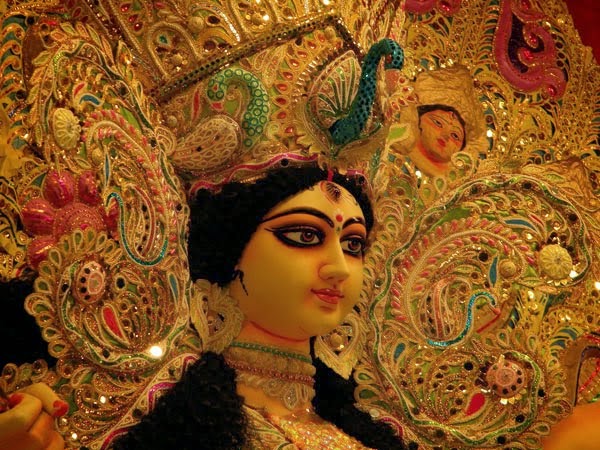
The murti (idol) of Durga in Bengal during Durga Puja is sometimes flanked by Ganesh, Kartik (Muruga), Goddess Saraswathi and Goddess Lakshmi. But what are these four important gods and goddesses in Hindu pantheon doing with Mahishasuramardini during Durga Puja? The popular story of Durga Puja and Navratri is that of Goddess Durga slaying demon Mahishasura. But in Bengal and in Eastern India, there is another story too and that is Goddess Durga along with her children coming to the earth to visit her parents. Confused?... Well, in Bengali story Goddess Durga is Uma or Sati the consort of Lord Shiva.
The legend goes like this.

Uma or Sati Marrying Lord Shiva
Uma, also known as Sati, was the beautiful daughter of Daksha, the king of Himalayas, and Menaka. Uma was in love with Lord Shiva and she worshipped and prayed to him to make her his wife. Pleased with Uma’s devotion, Lord Shiva accepted to marry Uma or Sati.

But Daksha was not ready to give her daughter to Lord Shiva who wore tiger skin and was bathed in ashes and roamed cemeteries. But an adamant Sati married Shiva. This angered Daksha and he waited for an opportunity to take revenge for this insult on Lord Shiva.

Daksha insulting Lord Shiva and Sati committing self-immolation
Daksha soon arranged for a ‘yagna’ (pujas) and invited all the gods and goddesses but deliberately left out Shiva. Uma wanted to go to the yagna and ask her father how he could ignore Lord Shiva – the god of gods. But Shiva disagreed and warned her that she will be insulted by the egoistic Daksha.

But Uma could not stand this insult to her husband and went to the ‘yagna.’ As foreseen by Lord Shiva, Daksha welcomed her with an array of insults mostly targeted at Shiva. Unable to bear the insults and coupled with the guilt feeling of not having listened to Lord Shiva, Uma jumped into the yagna fire and killed herself. (There are two versions some Puranas say she fasted to death other say she immolated herself).

Lord Shiva’s Anger and Lord Vishnu’s Intervention
Lord Shiva who came to know this gruesome incident, immediately reached Daksha’s palace. A furious Shiva wrecked havoc and lifted the body of Uma and started dancing – the dance of destruction. The three worlds trembled and many foresaw an imminent end of the universe.

The Devas approached Lord Vishnu and he suggested that the only way to pacify Shiva was by removing the body of Uma. For this Lord Vishnu cut the body of Uma with Chakra and it fell in different parts of the world and these places were known as Shaktipeeths – two important shaktipeeths are in Kalighat in Kolkata and Kamakhya in Guwahati. This pacified Lord Shiva.

Peace restored and Uma’s annual visit to her parents
Daksha was forgiven by Lord Shiva and Uma was later born as Parvati. Since peace was restored, it is believed that during Durga Puja in Ashwin month, Uma, with her children, Ganesh and Kartik and along with Goddess Saraswati and Goddess Lakshmi visits her parent’s home. Two friends or 'sakhis' of Uma – Jaya and Bijaya also accompany Uma.

Reference:- goo.gl/7zST97

Madurai Thirupparamkunram Murugan Temple Very Nice Place

Madurai Thirupparamkunram

Thirupparamkunram Murugan Temple, one of the Arupadaiveedu, the six main abodes of Lord Muruga, the temple at Tiruparankunram offers a mystic beauty. It is carved in rock and is monstrous in size for such an architecture. According to legend it is where Lord Muruga married Deivayanai, the divine daughter of the king of heaven, Indra, and he is said to have worshipped Shiva here as Parangirinathar.

The temple is located 8 kilometres (5.0 mi) from Madurai in India. In the main shrine, apart from Muruga, deities of Lord Shiva, Lord Vishnu, Lord Vinayaka and Goddess Durga are housed. The other Arupadaiveedu's dedicated for Lord Muruga are Thiruchendur (100 km south of Madurai), Palani (120 km west of Madurai), Swamimalai (150 km east of Madurai), Thiruthani (50 km from Chennai) and Pazhamudircholai (10 km north of Madurai).

Contents [hide]
1 Temple structure
2 Inscriptional evidence
3 Literary evidence
4 Festivals
5 Transport
6 External links
Temple structure[edit]

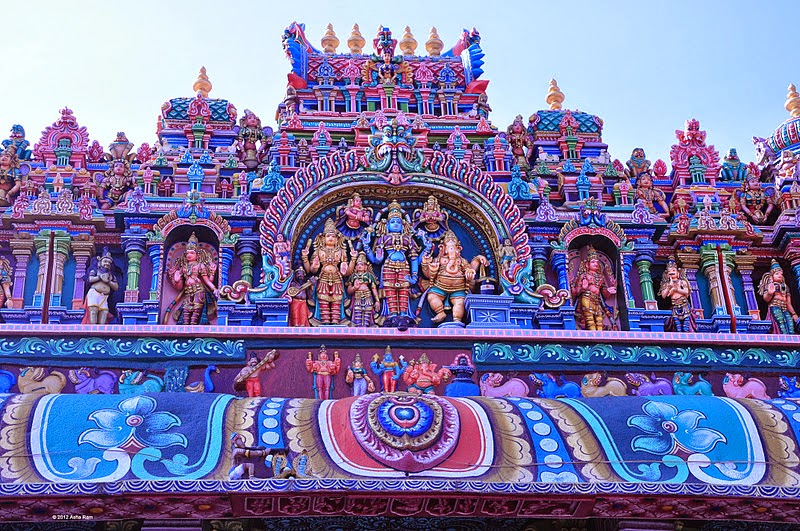
There are several architectural features of interest, especially the rock cut portions of this hill temple dating back to the Pandya period and the life sized sculptures in the mandapams of the Nayakar period. An Aasthaana Mandapam with several artistically carved pillars lead one to the towering 150 feet (46 m) high Rajagopuram at the entrance.

The Kambathadi Mandapam, Ardha Mandapam, and Mahamandapam are situated at different levels. The main shrine is an early rock cut temple which has cells that house the sanctums of Subramanya, Durga, Vinayakar, Shiva and Vishnu. All the statues are carved on the wall of the parankundram rock. The presiding deity lord shiva is known Parangirinathar and the female deity his consort mother Parvathy is known as Aavudai Nayaki. Panels depicting Shiva's dance of bliss are seen outside the sanctum. These magnificent works of art date back to the Pandya period.

A curious feature of this temple is that the Gods Shiva and Vishnu face each other in the main shrine, and this is a rare thing in ancient Hindu temples. This is because Hinduism always held two distinct worshipping groups - Shaivites (worshippers of Lord Shiva) and Vaishnavites (worshippers of Lord Vishnu). Outside the temple there is a beautiful pond where, according to Temple tradition, the fishes are served with salt and rice flakes by the devotees. There is also a Vedic school adjacent to the banks of the temple pond.This temple was built by carving the hill.

In front of the Dwajasthambam or the Kodi Maram, one gets the magnificently carved Nandi, Mayil and the Mouse ( the vehicle of Lord Ganesha). This is a specialty of this Murugan shrine.Going inside, one can see the sannidhis of various Hindu Gods and Hindu Goddesses. Of special mention is the sannidhi of Saneeswaran without the other eight Grahas. Climbing a flight of six steps called the "Shadashara Padigal", one reaches the Ardha Mandapam. One gets to see the rock carvings of Mahisshasura Mardini, Karpaga Vinayagar, Andarabaranar and Uggirar.

There is also a rock carved sannidhi for Lord Vishnu and Goddess Lakshmi. Shiva in the form Sivalingam and Sathiyagireeshwarar sannidhis located here cannot miss the attention of the Muruga Bakthas visiting this Murugan shrine.

The Moolavar deity is also sculptured from a rock. Abhishekams for the presiding deity is done to the Murugan's Vel only.

There are five Theerthams, or divine water sources, in and around the temple, Saravana Poigai, Lakshmi Theertham, Saniyasi Kinaru (well), Kasi Sunai, and Sathiya Koopam.

Inscriptional evidences
Inscriptional evidences point out that this temple, being carved out of a hill, was most probably earlier a Jain cave( earlier to this, the Murugan temple existed much before.i.e., during 7th century and converted into jain worship centre by jain monks who influenced the pandya king Koon pandiyan ), which was however later converted into a Hindu temple. Gajapathy, Minister of the Pandya King, was instrumental during the later part of the 8th Century, to complete this conversion.

Literary evidence
Saint Gnana Sambanda, the famous Shaiva Saint of the 7th Century, has visited Thirupparamkunram and has sung Devaram on Lord Shiva. Probably, this Shiva temple is the present temple in the main road near the entrance to the Thirupparamkunram Murugan temple. The structure is quite old and ancient.

Gnana Sambanda has met the three Tamil chiefs, the Chera, the Chola and the Pandya in this temple and has blessed all the three of them.

Sundarar and Sambandar composed the Thevara Pathigam here. Nakkirar sang many poems on this lord. Tiruppugazh, Kandapuranam and other works speak of the glory of this shrine.

Festivals
Brahmotsavam here falls in the Tamil month of Panguni. The Vishnu named Pavalakanivai Perumal, and Lord Muruga is taken in procession to Madurai to celebrate Minakshi's wedding (Chittirai festival), with residents of Madurai dressed in festive clothing. Nakkirar's association with this temple is also celebrated as a festival. Skanda Sashti, the ten day Kartikai festival, Vaikasi Visakam, and the float festival in Thai are other celebrations here. Since Vishnu is here Vaikunta Ekadashi is also celebrated.

Transport
See the holy transportation section of Thiruparangunram. Buses are available from Madurai Periyar bus stand. All the buses moving from Periyar bustand to Thirumangalam go through Thiruparangunram.


Reference:- http://goo.gl/4xzQoJ

Ambe Maa Aarti


Ambe Tu Hai Jagdambe Kali is one the most famous Aartis of Maa Durga. This famous Aarti of Durga Mata is recited on most occasions related to Durga Mata.


आरती श्री दुर्गाजी
अम्बे तू है जगदम्बे काली, जय दुर्गे खप्पर वाली,
तेरे ही गुण गावें भारती, ओ मैया हम सब उतारे तेरी आरती।
तेरे भक्त जनो पर माता भीर पड़ी है भारी।
दानव दल पर टूट पडो माँ करके सिंह सवारी॥
सौ-सौ सिहों से बलशाली, है अष्ट भुजाओं वाली,
दुष्टों को तू ही ललकारती।
ओ मैया हम सब उतारे तेरी आरती॥
माँ-बेटे का है इस जग मे बडा ही निर्मल नाता।
पूत-कपूत सुने है पर ना माता सुनी कुमाता॥
सब पे करूणा दर्शाने वाली, अमृत बरसाने वाली,
दुखियों के दुखडे निवारती।
ओ मैया हम सब उतारे तेरी आरती॥
नहीं मांगते धन और दौलत, न चांदी न सोना।
हम तो मांगें तेरे चरणों में छोटा सा कोना॥
सबकी बिगड़ी बनाने वाली, लाज बचाने वाली,
सतियों के सत को सवांरती।
ओ मैया हम सब उतारे तेरी आरती॥
चरण शरण में खड़े तुम्हारी, ले पूजा की थाली।
वरद हस्त सर पर रख दो माँ संकट हरने वाली॥
माँ भर दो भक्ति रस प्याली, अष्ट भुजाओं वाली,
भक्तों के कारज तू ही सारती।।
ओ मैया हम सब उतारे तेरी आरती॥

Mata Vaishno Devi Aarti


Jai Vaishno Maa...

The 'Aarti' of the Goddess is performed twice a day first time in the morning just before the sunrise and second time in the evening immediately after the sunset.

The procedure of 'Aarti' is a very sacred and lengthy one. The Pujaris perform 'Aarti' before the holy deity first inside the sanctum- sanctorum and than outside the cave. Before the commencement of 'Aarti', the Pujaris perform 'Aatam pujan' i,e self-purification. Then the Goddess is bathed in water, milk, ghee (Clarified butter), honey and sugar. Thereafter the goddess is dressed-up in a saree, chola and chuni and ornaments are endowed upon her. The whole process takes place amidst the enchantment of various shlokas and Mantras. Thereafter Tilak is placed on the forehead of the deity and Navied (prashad) is offered to her. The Pujaris perform puja of various Gods and Goddesses, as it is a believed that during the Aarti time, all the Gods and Goddesses are present inside the sanctum Sanctorum. The Jyoti (divine lamp) is lightened and then the 'Aarti' of the goddess is performed. After the whole procedure, the thaal which contains the lamp and various other items used in the 'Aarti', is brought outside the mouth of the holy cave, where 'Aarti' of the goddess is performed in the presence of yatris. The yatris who remain seated outside the holy cave during the time when the Aarti is performed inside the Sanctum Sanctorum, keep listening to the Pravachans of head Pandit. After the Aarti outside the holy cave is over, the pujari distributes Prasadam and the charanamrit ( the holy water) to the devotees.

आरती श्री वैष्णो देवी
जय वैष्णवी माता, मैया जय वैष्णवी माता।
हाथ जोड़ तेरे आगे, आरती मैं गाता॥
शीश पे छत्र विराजे, मूरतिया प्यारी।
गंगा बहती चरनन, ज्योति जगे न्यारी॥
ब्रह्मा वेद पढ़े नित द्वारे, शंकर ध्यान धरे।
सेवक चंवर डुलावत, नारद नृत्य करे॥
सुंदर गुफा तुम्हारी, मन को अति भावे।
बार-बार देखन को, ऐ माँ मन चावे॥
भवन पे झण्डे झूलें, घंटा ध्वनि बाजे।
ऊँचा पर्वत तेरा, माता प्रिय लागे॥
पान सुपारी ध्वजा नारियल, भेंट पुष्प मेवा।
दास खड़े चरणों में, दर्शन दो देवा॥
जो जन निश्चय करके, द्वार तेरे आवे।
उसकी इच्छा पूरण, माता हो जावे॥
इतनी स्तुति निश-दिन, जो नर भी गावे।
कहते सेवक ध्यानू, सुख सम्पत्ति पावे॥


Jai Vashnavi Mata, Maiya Jai Vashnavi Mata.
Hath Jood Tere Aage, Aarti Mai Gatta. Sheesh Par Chatra Birajay, Murtiyan Pyaari. Ganga Bhati Charnan, Jyoti Jage Nyaari.
BrahamVed Pade Nit Dware, Shankar Dhyana Dhare.
Sevat Chanvar Dulavat, Narad Nritya Kare.
Sundar Gufa Tumhari, Mann ko Ati Bhave.
Baar-Baar Dekhne ko, Ae Ma Mann Chave.
Bhawan Pe Jhande Jhulay, Ghanta Dhwani Baajay.
Uncha Parvat Tera, Mata Priya Laagay.
Paan Supari Dhwaja nariyal, Bhent Pushp Mewa.
Dass Khadde Charnon mai, Darshan Do Deva.
Jo Jan Nischay karke, Dwar Tere Aavay
Etni Stuti Nishidin, Jo Nar bhi Gavay.

Money management lessons from Lord Ganesha


Worried about your financial future? Lord Ganesha has some tips for you.

It is that time of the year when Lord Ganesha comes to bless our homes with peace, happiness and prosperity. Here are few things we can learn from the lord who himself symbolises wealth creation and financial wellness.

The good Lord Ganesha is also called the vighnaharta or the remover of all troubles and is generally invoked before one begins a new venture. So, if you have been having troubles keeping your finances in order and worry relentlessly about your future, this is a great time of the year to begin financial planning with the blessing of the Lord.

Let us tell you how.

1. See the big picture ahead

Gajanana or the elephant headed Lord himself sees and also encourages you to see the big picture. Worried about how your future will turn out as far as finances are concerned? Chalk out a financial plan. Begin with identifying your short, medium term and long term financial goals.

The second step is to make a budget and see what your expenses are and how much you can save after having met them. With your investible corpus, identify the asset classes according to your risk appetite and invest in diverse asset classes to see your savings grow.

The big picture should also include things like insurance allocation, retirement planning and estate planning.

2. Eyes focused with concentration

Lord Ganesha has small and sharp eyes and he is also called the Chinteshwara. The eyes of Ganesha symbolise focus and concentration.

Once you have chalked out your financial goals, you should keep your eyes firmly on them and work diligently towards achieving them in the time frame you have stipulated for yourself.
3. All the better to listen with large ears

The Lambakarna or the large ears of Ganesha tell you to keep your ears open wide for financial advice. Today there is a lot of financial advice being disseminated on television, newspapers, websites and even social media platforms.

If you are alert and keep your ears open, you will be able to glean the best advice that will help you remove the clutter from your portfolio and take the right investment decision that will help you create long term wealth.
4. Keep a check on what you say with a small mouth

The Gajavaktra or the small mouth of the Ganesha tells you that you should not be loud mouthed about your finances or your financial plan. If you seek advice or need to discuss investment ideas do it only with a trustworthy few.

5. Fork out bad investments with tusk like power

The tusk of the Lord for which he is referred to as Ekdanataya conveys that one should have the ability to fork out the investments that are not performing well and holding back the potential of your portfolio.

Periodic assessment of your portfolio is an important part of financial planning.

If you keep a hawk eye over your portfolio, you will be able to identify those investments that need to be sold off to book timely profits and invested elsewhere for better returns.

6. Be adaptable to unfavourable conditions

Lord Ganesha is referred to as the Vakratunda or the one with a large trunk. The trunk of the Lord tells you to be patient and adaptable when the things are not so good. Market conditions vary due to several macroeconomic factors and that at times may have a negative impact on your portfolio.

At such times, you should not panic and make rash decisions. Instead, you should keep your cool and see what best can be done as far as rejigging your portfolio is concerned.

7. Your risk appetite should be adequate

The large stomach of the Lord, by which Ganesha is referred to as Lambodara tells you that you should have the ability to stomach the good as well as bad. Despite taking precautions, it is imperative that you will incur some losses from time to time.

The large stomach of the Lord says that you should have the adequate risk appetite to stomach the consequences of your investment decisions.

8. Reward comes in good time

Modaks, the favourite dessert of the Lord is distributed as prasada after the aarti is done. This is the Lord's way of telling you that if you have worked hard to make a financial plan successful you will be rewarded with sweet gains in due course of time, and can lead a life sans financial worries.

So now that you have learnt what the beautiful deity symbolises, do invoke His blessings as you embark on the path of wealth creation.


Reference:- http://goo.gl/8uRtXv